
Most outdoor gear is built to be replaced. The Svea 123 was built to be inherited. Seventy years after it first appeared, the same little brass cylinder is still on store shelves. It still roars away on mountain passes, and still, quietly, embarrasses stoves designed decades later.
Fifty years, one stove
This is not just marketing. In REI’s Co-op Journal, a writer describes still cooking on a Svea 123 decades after it came into the family, the brass gone dark with use and the roar unchanged. Search any classic-stove forum and the story repeats: a Svea bought in the 1970s, stored in a garage for years, pulled out for a trip, primed, and lit on the first try. Nothing about it has been improved because nothing about it needed improving. That is the quiet proof behind the claim, a piece of gear that reliably outlives the person who bought it.
1955, and a genuinely new idea
When the Svea 123 arrived in 1955, it earned a bold title: the first truly compact white-gas backpacking stove. You could drop it inside a pack rather than lash it to the outside.
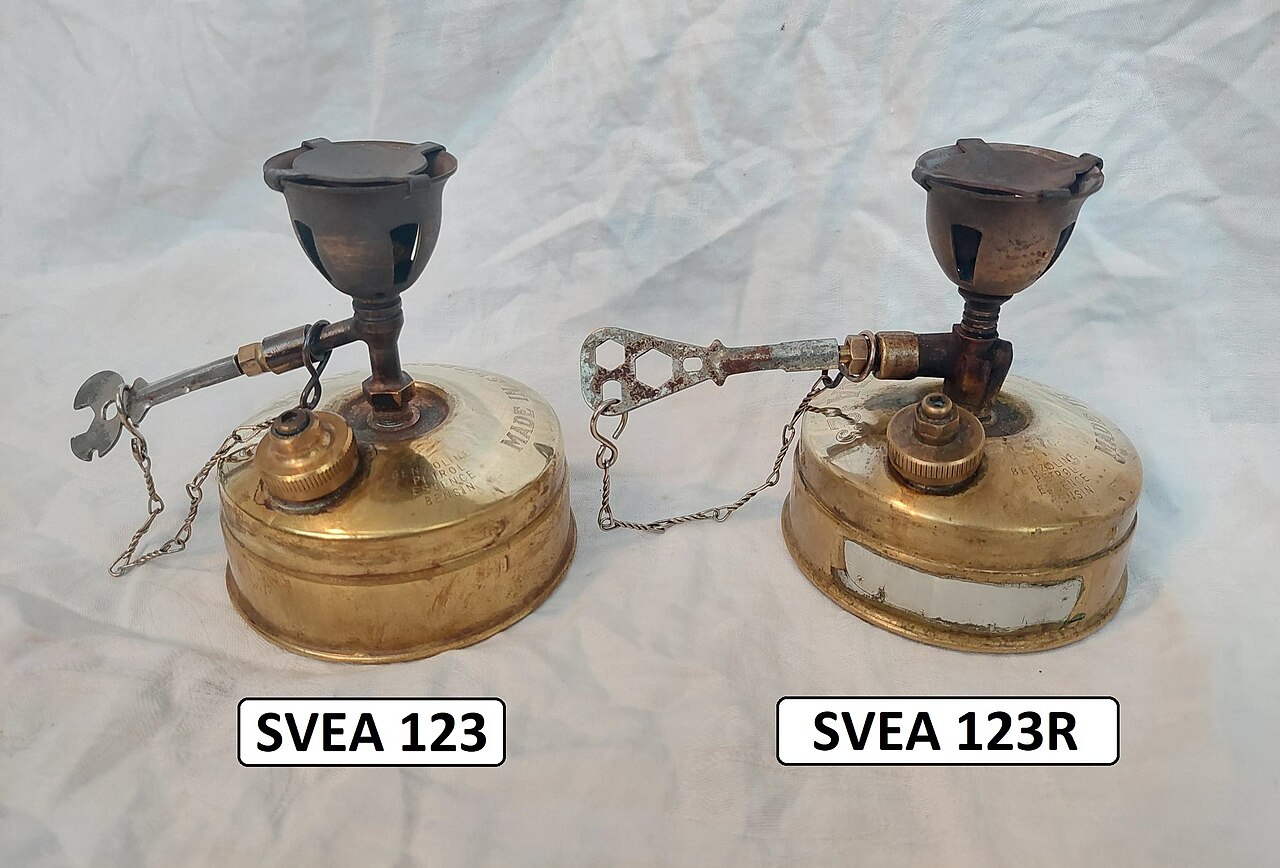
It came from Sweden, whose makers had spent decades refining pressurized liquid-fuel stoves. It distilled that experience into a package about the size of a large mug. Optimus, another Swedish firm, took over the Svea line in 1969 and has kept it in production ever since. Manufacturing has since moved to Taiwan, but the stove on the shelf today would be entirely familiar to a climber from the 1950s.
How the Svea 123 actually works
The clever part is what the stove does not have.
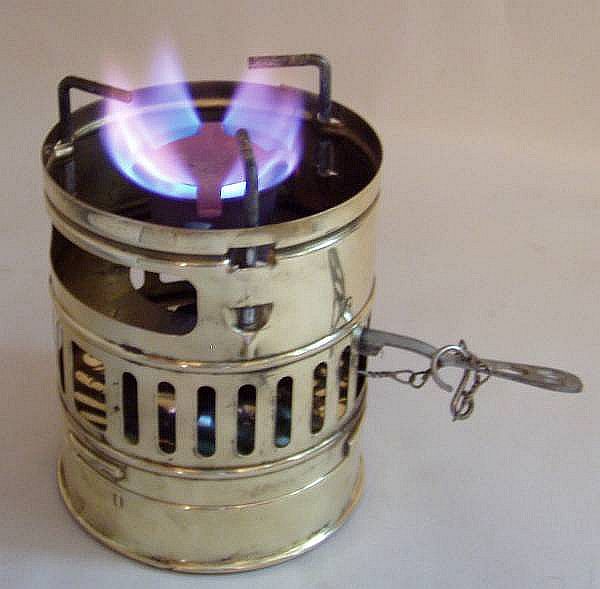
There is no pump. You prime it by dribbling a little fuel into the cup at the base of the burner and lighting it. That warms the brass tank underneath. As the tank heats, the fuel inside builds its own pressure, pushes vapor up through the jet, and sustains the flame. The stove is, in effect, powered by its own warmth. Open the valve at the right moment and it settles into the sound it is famous for. A steady roar tells half the campsite that coffee is on the way.
A small cap doubles as a windscreen and a tiny pot, the whole thing weighs about 550 grams, roughly eighteen ounces, and it puts out close to 4,800 BTU, enough to bring a liter of water to a boil in a handful of minutes. The later 123R added a built-in cleaning needle that clears the jet automatically, which removed about the only chore the original ever asked of its owner.
Why it lasts
Brass is the honest answer. It does not rot, it shrugs off dents, and it takes on a deep gold-brown patina that makes a well-used Svea look better at forty than it did new. The deeper reason is the near-total absence of things that can break. No pump seals to dry out, no electronics, no plastic to crack in the cold. A stove that pressurizes from its own flame has removed the part most likely to fail. Long-time owners tend to reach for the same word: bomb-proof.
Its place in the pack, then and now
For a couple of generations, the Svea was simply what serious hikers and climbers carried.
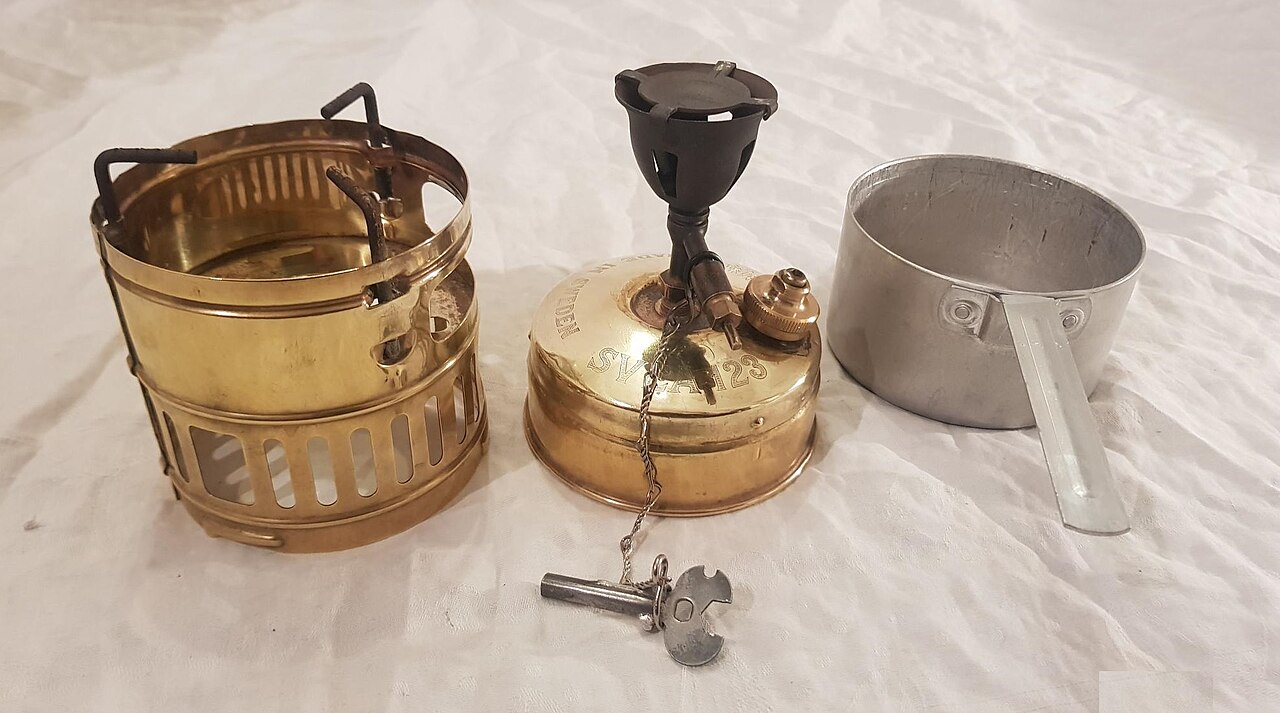
It went up big peaks, across long trails, and into decades of family camping trips, and a striking number of those stoves are still running. Newer canister stoves are lighter and faster to light, and for a fast weekend they make sense. But the Svea trades those few ounces for something harder to buy: fuel you can find almost anywhere, performance that holds up in cold and at altitude, and the reasonable expectation that it will outlive you.
Watch: the Svea 123 in action
That is the quiet argument the Svea 123 has been making for seventy years. In a market that sells novelty by the season, it keeps proving that a good enough idea, built well enough, simply never needs replacing, the same lesson as the Dana Design packs that refuse to die. It refuses to die, and after all this time, that looks less like stubbornness and more like the point.
The bottom line: the Svea 123 is still made and widely sold, it runs on white gas you can find almost anywhere, and with basic care it will outlast most of the gear in your pack. For more gear built to be inherited, see the related reading below.
Related reading
- Dana Design: The Packs That Refuse to Die
- Renovo Wooden Bike: Is the Fusion of Tradition and Innovation Back?
- Ray Jardine Was Right. Ultralight Backpacking Missed the Point.

Recent Comments