
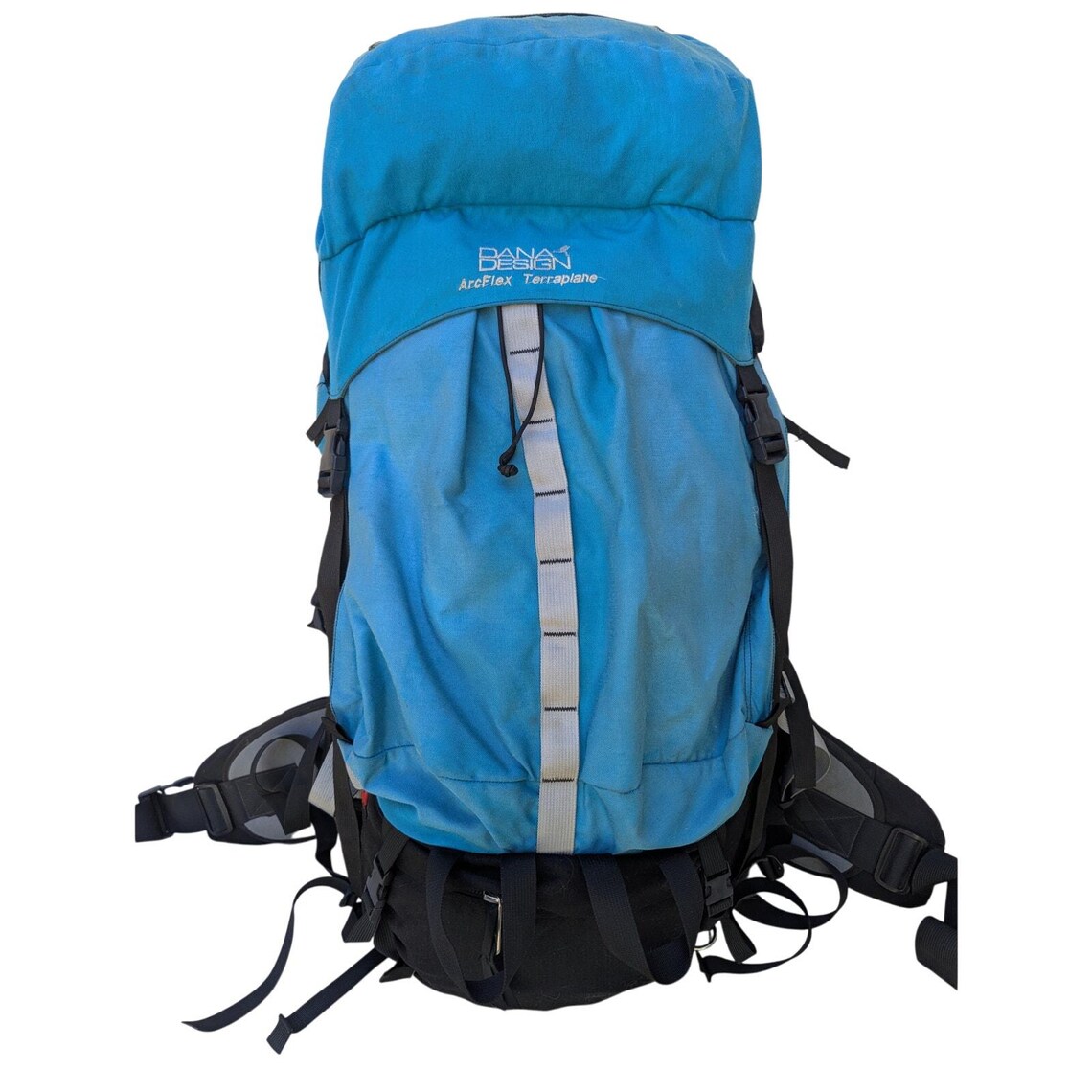
Somewhere right now there is a thirty-year-old backpack going up a mountain. Faded, a little sun-rotted at the lid, hip belt worn to the shape of one specific person. If you look closely the logo says Dana Design, a company that has not built a pack in two decades. Its owner has no intention of replacing it, because nothing sold today does the one thing this pack was built to do.
That was always the point of a Dana.
Before Dana Design, there was Kletterwerks
The story starts in 1975, when Dana Gleason landed in Bozeman, Montana and started a company called Kletterwerks. He had spent years around climbing gear, repairing it and taking it apart, and he had come to a blunt conclusion: most backpacks were bad at the two things that actually mattered. They did not fit people, and they did not survive abuse. So he started building his own.
The early Kletterwerks line included the Day, the Flip, the Rock, the Hip Sack, and, importantly, the Terraplane. The company grew out of Gleason’s house and into downtown Bozeman. In 1978 he sold it and moved on to camera and equipment bags, and Kletterwerks eventually went bankrupt in 1983. Two years after that, in 1985, Gleason and Renee Sippel-Baker, who had worked with him at Kletterwerks, started Dana Design.
| 1975 | Kletterwerks, Bozeman Dana Gleason starts building his own packs. The original Terraplane is among them. |
| 1985 | Dana Design is founded Gleason and Renee Sippel-Baker launch the company in Bozeman. |
| Early 90s | Dana becomes legendary 200-plus employees, multiple Montana facilities, a global dealer network. One reputation: heavy loads, carried well. |
| 1995 | Sold to K2 Gleason and Sippel-Baker sell Dana Design to the conglomerate that became K2. |
| Late 90s | Gleason leaves He stays involved a few years, then steps away from the brand he built. |
| 2000 | Mystery Ranch begins Gleason and Sippel-Baker reunite in Bozeman and start over. |
| 2001 | Dana leaves Bozeman K2 moves Dana operations to Vashon Island, WA, and later folds the brand under Marmot. |
| 2006 | Dana Design retired Marmot ends it as a standalone brand with the spring 2006 line. Mystery Ranch is already underway. |
How Dana became legendary
By the early 1990s, Dana Design was one of those brand names that needed no explanation among serious backpackers. You either knew, or you were about to find out from someone who did.
At its peak the company ran multiple Montana production facilities, employed more than 200 people, and sold through dealers around the world. The reputation rested on one simple, verifiable claim: a Dana carried heavy loads extraordinarily well. This was before ultralight became an outdoor religion. A Dana was not designed around the question of how little material you could get away with. It was closer to the opposite. Where else should we reinforce this thing?
Heavy fabric. Big zippers. Serious stitching. A hip belt you could lean your whole weight into. The hardware looked capable of towing a truck.
Plenty of packs carry 25 pounds just fine. Dana earned its name at 50 or 60.
The engine underneath was the ArcFlex suspension, an internal frame that paired aluminum stays with a broad plastic frame sheet to spread the load and drive it down into the hips. A great expedition pack does not reveal itself in a store. It reveals itself an hour up the trail with 55 pounds on your back. Dana built for that hour.
The Terraplane
Gleason first designed the Terraplane in the Kletterwerks years and brought the idea back at Dana Design. Decades later it is still the pack the Dana faithful reach for first. The verdict is shorter than any reviewer’s has ever been:
The Terraplane rules, man.
Said Everyone
The ArcFlex Terraplane was a big expedition pack with unmistakable twin vertical pockets running up the back, a sleeping-bag compartment, a floating lid, and that massive suspension holding it all together. It was not light. Nobody cared. You loaded it, cinched the belt, and it carried in a way that made competing packs feel primitive. And the things lasted. That is why thirty-year-old Terraplanes still turn up on eBay and Geartrade, waiting for someone to take them back into the mountains.
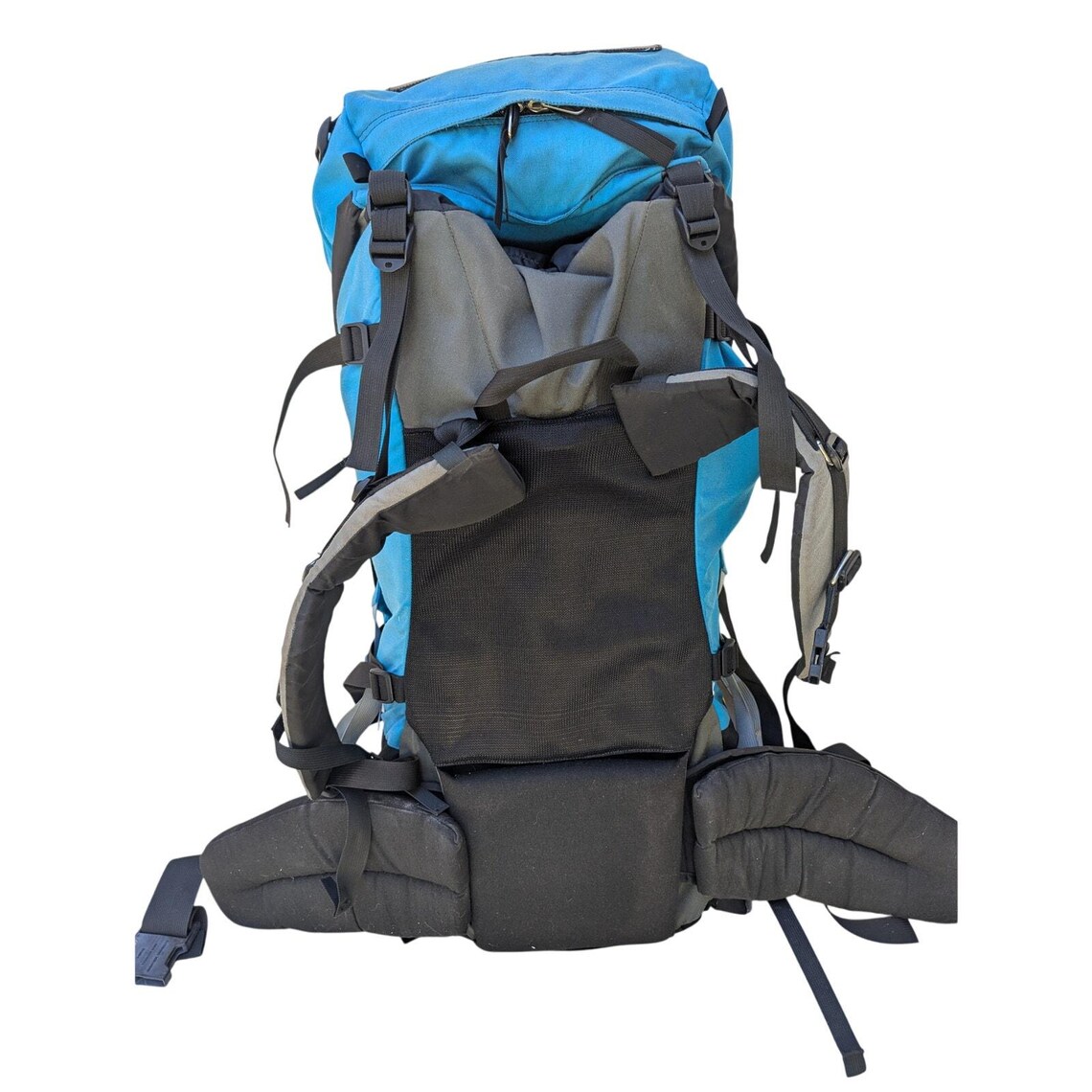
The rest of the stable followed the same logic at different sizes. The Astralplane sat at the enormous end, an expedition monster for people whose packing lists apparently included anvils. The Glacier was the classic big backpacking pack. The Bridger scaled the Dana treatment down, and the Bomb became a smaller technical favorite whose influence outlived the company.
It was not only backpackers who noticed. Military units did too, long before “tactical” became a lifestyle aisle. People who genuinely needed to move miserable amounts of gear through miserable places figured out that Dana’s suspensions worked. Remember that. It matters later.
And then K2 came along
Success created a different problem. Dana had grown from a little Bozeman shop into a business doing something like $10 million a year. Manufacturing expanded. The dealer network expanded. Running the company became a very different job from designing backpacks.
In 1995, Gleason and Sippel-Baker sold Dana Design to the conglomerate that became K2. The sale did not kill the brand right away. It killed it slowly, which is worse to watch. Gleason stayed involved for a few years, then left in the late 1990s. Packs kept coming under K2, which is why a circa-2000 Terraplane LTW exists at all, a lighter reinterpretation that shows the whole industry starting to flinch at the question of why an empty pack should weigh as much as somebody’s sleep system.
Then came the corporate sentence every enthusiast brand eventually hears. In 2001 K2 moved Dana operations from Bozeman to Vashon Island, Washington. After K2 acquired Marmot, Dana was folded under Marmot. In 2005 Marmot announced Dana Design would disappear as a standalone brand with the spring 2006 line. A few models limped on wearing Marmot labels. After roughly twenty years, Dana Design was dead.
Sort of.
Dana starts over
Here is the part that saves the story. By the time K2 finally shut the brand off, Dana Gleason had already been building its spiritual successor for years.
In 2000, Gleason and Sippel-Baker reunited in Bozeman and founded Mystery Ranch. Put an old Dana next to an early Mystery Ranch and the family resemblance is not subtle. It is not about cosmetics. It is the same creed: load carriage first, durability first, build the pack for the person who actually has to use it.
Build the pack for the person who actually has to use it.
Dana Gleason’s design philosophy
Mystery Ranch struggled early with the hard economics of making expensive American packs for ordinary backpackers. Then the phone rang. A military unit came looking, because it wanted more of the old Dana Design packs it had been using for cold-weather training, and Dana Design did not make them anymore. So Gleason built a special run of roughly 1,000 packs and called it Big D’s Special Blend, a fresh take on the Terraplane idea using the ArcFlex-style frame concepts Mystery Ranch was developing. That work fed the G7000 and G6000 and pushed Mystery Ranch deep into military load carriage.
Dana builds the Terraplane. Dana Design becomes legendary. Dana sells it. Dana leaves. The people still carrying his old packs track him down because they want more. So he builds them something better.
The industry caught up. It just started somewhere else.
Modern packs are dramatically lighter than the old Danas. Materials are better, suspensions are smarter, and you can now haul a serious load without starting from six pounds of empty backpack. On the spreadsheet, the old Danas lose.
But pick one up and you understand instantly what its designers cared about. Not winning a weight comparison. Not shaving three ounces from last year’s model. Carrying a heap of gear into the mountains without breaking. That was the starting point, not a footnote at the bottom of the spec sheet.
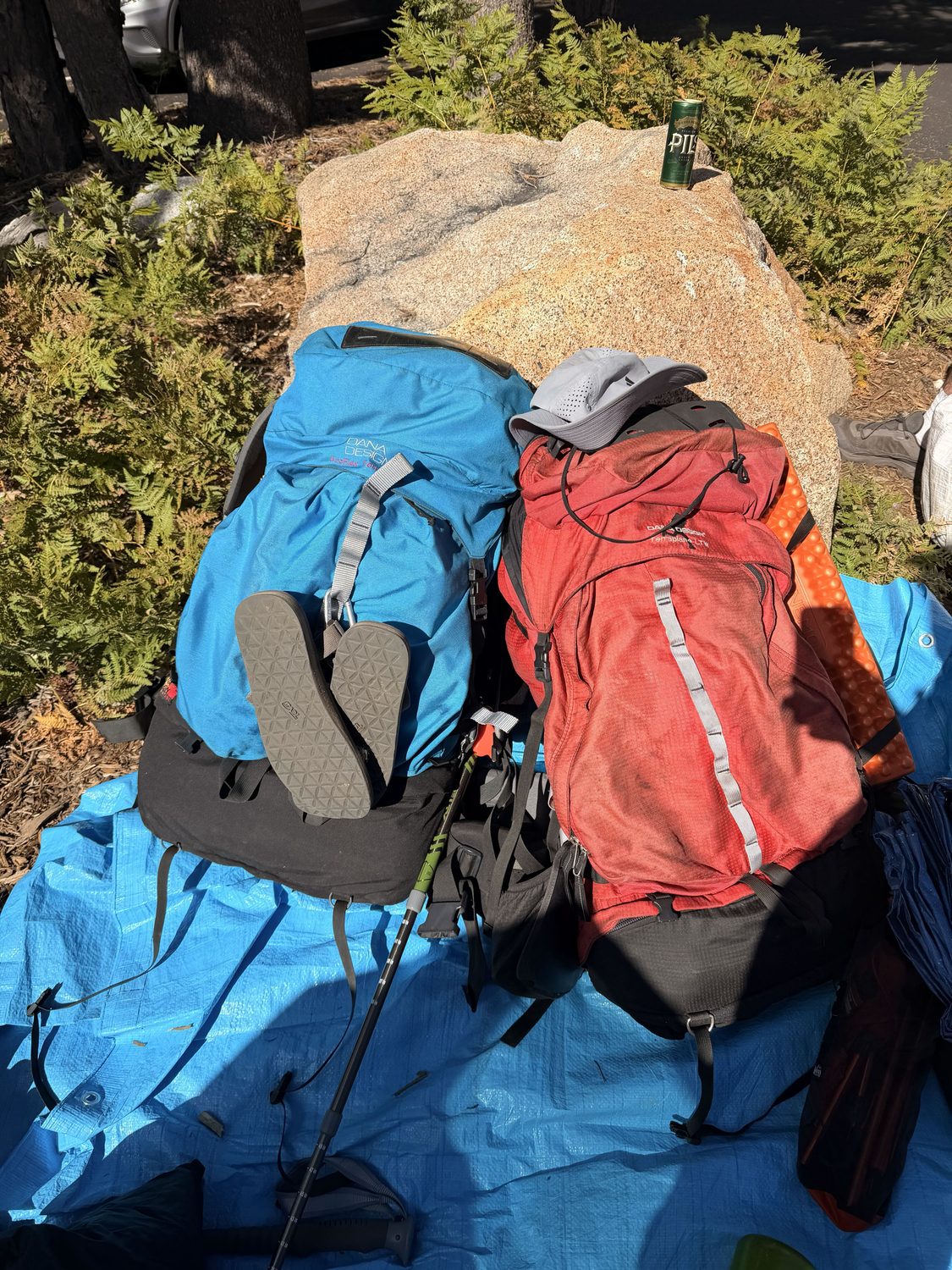
Thirty years on, a surprising number of them are still doing exactly that. Two of them here are the writer’s own, a blue ArcFlex and a red Terraplane LTW. Family heirlooms now, and still earning their keep. Maybe Dana had it right.
Sources and notes: Timeline follows Mystery Ranch’s own company histories and trade coverage of the K2 and Marmot years. The Terraplane LTW year, weight and materials are left unconfirmed, because no reliable period catalog has been verified. Pack photos provided by GetOutdoors.

Recent Comments